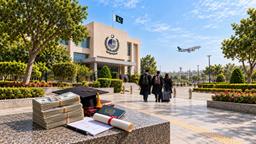
Punjab Government to Provide Free Laptops for Private University Students in 2025




Lahore, December 11, 2025 — In a significant policy expansion, the Punjab government has announced that, for the first time, students enrolled in private universities across the province will be eligible to receive free laptops under the Chief Minister’s laptop scheme.
The decision aims to bridge the digital divide between public and private higher education and ensure equal access to technology for all students.
The inclusion of private university students marks a major shift in the long-running laptop distribution initiative, which has until now focused mainly on public sector students.
The move is expected to benefit thousands of young learners, helping them overcome barriers to academic success by providing essential technological tools.
First Phase to Begin With 10,000 Laptops
According to the Punjab Higher Education Department, the first phase of this expanded scheme will see the distribution of 10,000 laptops to eligible private university students.
While the exact timeline for distribution is yet to be finalized, work on the implementation process has already begun, with officials preparing merit lists and verification mechanisms.
The decision responds to growing concerns that students in private institutions have historically lacked access to the same level of technological support offered to their peers in public universities.
By expanding eligibility, the government aims to level the playing field and support academic excellence irrespective of institutional affiliation.
Eligibility Criteria and Merit Requirements
Officials have confirmed that the eligibility criteria for the expanded laptop scheme will remain consistent with the existing framework used for public sector students. To qualify, private university students must:
- Be enrolled in a higher education institution within Punjab.
- Have a strong academic record, meeting a minimum threshold of 70% marks or its equivalent CGPA in their most recent examination.
- Not have received a laptop from previous phases of the scheme.
By maintaining these standards, authorities intend to ensure that the laptops are awarded on merit and reach students who are most likely to benefit academically and professionally.
Reserved Quotas to Promote Equity
Punjab’s laptop distribution program includes reserved quotas for specific student groups, and this practice will continue under the expanded scheme for private university students. These quotas are designed to support:
- Female students
- Students with disabilities
- Students from low-income families
These measures are intended to promote equity and ensure that vulnerable and underrepresented students receive targeted support.
Officials say that maintaining these reserved categories is essential to the spirit of the program and reflects the government’s commitment to inclusive educational policies.
Government Perspective
The expansion comes amid ongoing efforts by the provincial government to promote digital literacy and enhance the quality of higher education.
Chief Minister Maryam Nawaz Sharif as been a vocal supporter of student-focused initiatives aimed at providing equal opportunities and reducing economic barriers to learning.
Prior to this development, the CM’s laptop scheme in 2025 had already made headlines for its ambitious goals.
Earlier in the year, over 110,000 laptops were scheduled for issuance under the broader program, primarily targeting students in public sector universities, colleges and medical institutions.
The initial scheme sought to empower young learners by equipping them with high-performance devices featuring modern specifications, helping them adapt to increasingly digital academic environments.
With the expansion to private universities, these benefits are set to reach a wider pool of students.
Broader Context: Digital Education Drive
Punjab’s free laptop initiative is part of a broader government strategy to enhance digital access and education outcomes for students.
Since the start of 2025, several measures have focused on improving learning infrastructure and reducing barriers to technology.
Earlier phases of the laptop scheme included devices for public sector students based on academic merit and institutional enrollment.
These devices were intended to support online learning, digital research, project work and coursework that increasingly relies on computer access.
Beyond laptops, the provincial government has invested in other educational and youth empowerment programs, aiming to foster digital skills and reduce socioeconomic gaps in educational access.
Reactions From Students and Educators
News of the expanded laptop scheme has been met with enthusiasm across academic communities in Punjab. Many students studying at private universities have expressed optimism that this development will help them compete more effectively in both academic and professional arenas.
Access to laptops is seen as essential not just for coursework but also for online research, digital collaboration, internships and skill development.
University administrators have also welcomed the expansion, noting that technology access is a critical factor in modern education.
Some private institutions have previously provided laptops to top performers through internal scholarships or partnerships, but the provincial initiative will significantly broaden access for students who may not have the means to secure their own devices.
Implementation Challenges and Next Steps
Despite the excitement, practical challenges remain on the ground. Officials must carefully manage the application, verification and distribution process to ensure transparency and fairness.
Ensuring that criteria are consistently applied and that reserved quotas are honoured will require coordination between the Higher Education Department and private universities.
Logistics remain a key concern. With the first phase targeting 10,000 students, authorities are expected to finalize distribution lists in the coming weeks. Educational institutions may be asked to collect and submit student records, academic transcripts and proof of eligibility for verification.
In the long term, the government plans to assess the impact of the expanded scheme and may consider scaling further if demand and outcomes justify it.
What This Means for Students
For private university students across Punjab, the inclusion in the CM’s laptop scheme represents a meaningful step toward reducing educational disparities. Having access to a free, high-quality laptop can:
- Improve academic performance
- Enable participation in online learning and virtual classrooms
- Support digital research and multimedia projects
- Enhance readiness for future careers requiring technical skills
With the first phase set to begin, thousands of students stand to benefit from a policy designed to empower learners and strengthen the province’s human capital in a technology-driven world.
Related Read
Punjab Launches Merit Scholarship Card for IT Students
Punjab Launches IT Internship Program to Empower Young Graduates
About Author


Let us help you yield your true academic potential for foreign education. To configure and discover an apt international enrolment strategy, get in touch!


- +923041111444
- info@edify.pk
- Edify Building, 3rd Floor, Madina Town Faisalabad
© 2026 Edify Group of Companies. All Rights Reserved.