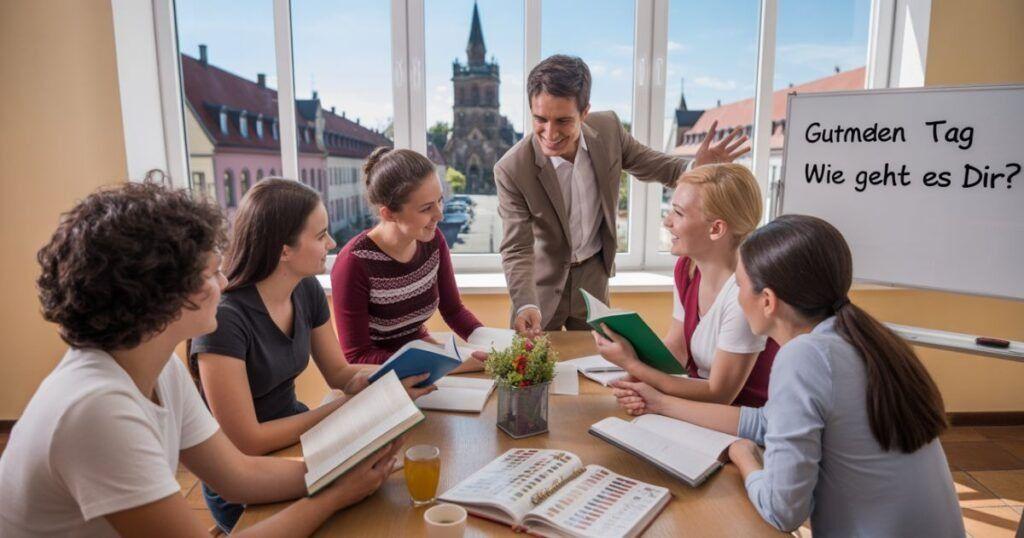
International Students’ Guide to Speaking German Confidently




Learn how to be mastering in German. Effective tactics can significantly impact your language learning experience, especially when understanding German.
Using the correct strategies helps guarantee that your efforts provide the best outcomes, regardless of your experience level.
Mastering German can open many academic, professional, and cultural opportunities for international students. Learning the language helps students communicate effectively, understand German culture, and access quality education in German-speaking countries.
With consistent practice, the right resources, and dedication, students can gradually build confidence and fluency in German.
Learn German Fast: Effective Strategies and Tips
Learning German efficiently requires strategic approaches. Here are some effective strategies to accelerate your language acquisition:
1. Immerse Yourself in German Content
Surround yourself with German-language movies, books, and podcasts. Immersion exposes you to native speech patterns and vocabulary in context.
2. Practice Regularly with Native Speakers
Engage in conversations with native German speakers through language exchange programs or online platforms. Regular practice is critical to improving fluency.
3. Utilise Language Learning Apps
Use language learning apps like Duolingo, Babbel, and Rosetta Stone.
These platforms offer structured lessons and interactive exercises tailored to your proficiency level.
4. Set Realistic Goals
Establish achievable milestones for language learning. Setting specific, measurable goals keeps you motivated and focused on progress.
5. Join Language Classes or Workshops
Enroll in language classes or workshops to receive formal instruction and guidance from experienced teachers.

Why Learn German? Top Reasons to Master the German Language
Understanding the reasons behind learning German can provide additional motivation and purpose.
The following are solid reasons for learning German:
1. Economic Opportunities
Germany is a global economic powerhouse with diverse job opportunities, especially in the engineering, automotive, and technology industries.
2. Cultural Enrichment
Immerse yourself in the rich cultural heritage of German-speaking countries, including literature, music, and cinema.
3. Academic Excellence
Germany is home to renowned universities offering world-class education and research opportunities across various disciplines.
4. Travel Convenience
You can easily explore Central Europe, as German is widely spoken in countries like Austria, Switzerland, and Belgium.
How Long Does It Take to Learn German?
The time required to learn German depends on factors such as study consistency, learning environment, and previous language experience. However, language experts provide general estimates for reaching different proficiency levels.
At the beginner level (A1–A2), learners usually need around 600–800 hours of study. At this stage, they can understand basic phrases, introduce themselves, and manage simple everyday conversations.
Reaching the intermediate level (B1–B2) typically requires 800–1,000 hours of learning. Students at this level can communicate more confidently, understand longer texts, and discuss various topics.
For the advanced level (C1–C2), learners often need 1,500 hours or more. At this stage, they can communicate fluently, understand complex materials, and use professional or academic vocabulary.
Why Learn German as an International Student?
Learning German offers many benefits for international students, especially those who plan to study or work in Europe. One of the biggest advantages is academic opportunity.
German is an important language in education, and many universities in Germany and other German-speaking countries offer high-quality programs where courses are taught in German. By learning the language, students can access a wider range of academic programs and educational resources.
German also opens doors to excellent career opportunities. Germany has one of the strongest economies in the world and plays a major role in global business.
Many industries such as engineering, finance, science, and technology value professionals who can speak German. As a result, students who learn the language may have better employment prospects and the chance to work with international companies.
Beginner’s Guide: How to Learn German Quickly and Easily
Starting your German language adventure can be thrilling and challenging. Here is a beginner’s guide to starting your learning process:
1. Learn the Basics of German Grammar
Begin by familiarising yourself with the German alphabet, pronunciation, and fundamental grammar rules.
2. Focus on Essential Vocabulary
Begin with daily routine words and phrases used in greetings, introductions, and daily interactions.
3. Practice Listening and Speaking
Listen to German podcasts, view German films with subtitles, and practise speaking skills to improve your auditory comprehension and pronunciation.
4. Use Language Learning Apps
Enhance your study with apps that provide interactive activities, flashcards, and quizzes to reinforce vocabulary and grammar principles.
5. Seek Language Partners
Join language exchange groups or connect with native speakers for language practice and cultural exchange.
Mastering German: Key Language Basics You Need to Know
To become proficient in German, focus on mastering essential language basics:
1. Noun Genders and Cases
Understand grammatical gender (der, die, das) and how nouns change based on their role in a sentence (nominative, accusative, dative, genitive).
2. Verb Conjugation
Learn verb conjugation patterns in different tenses (present, past, future) and how they change based on subject pronouns.
3. Sentence Structure
Grasp the word order in German sentences, including subordinate clauses and dependent phrases.
4. Common Phrases and Idioms
Familiarise yourself with common expressions and idiomatic phrases used in everyday conversation.
Daily German Phrases: Essential Expressions for Beginners
Start incorporating these essential German phrases into your daily practice:
1. Greetings and Introductions
- “Guten Tag!” (Good day!)
- “Wie heißt du?” (What’s your name?)
- “Ich heiße…” (My name is…)
2. Ordering Food and Shopping
- “Ich hätte gerne eine Brezel, bitte.” (I would like a pretzel, please.)
- “Wo ist der Supermarkt?” (Where is the supermarket?)
3. Asking for Directions
- “Entschuldigung, können Sie mir den Weg zum Bahnhof sagen?” (Excuse me, can you tell me the way to the train station?)
4. Making Small Talk
- “Was machst du gern in deiner Freizeit?” (What do you like to do in your free time?)
- “Wie ist das Wetter heute?” (What’s the weather like today?)
German Language Mistakes to Avoid: Common Errors and Solutions
Avoid these common pitfalls when learning German:
1. False Friends
Watch out for words that sound the same but mean different things. For example, “aktuell” (current) in German means “up-to-date”, but “currently” in English.
2. Pronunciation Challenges
Practice challenging sounds like “ö,” “ü,” and “ch” to improve your spoken German.
3. Preposition Usage
Learn the correct usage of prepositions (an auf, in, unter, über) in German to avoid grammatical errors.
4. Word Order and Sentence Structure
Understand the differences in sentence structure between English and German, particularly regarding verb placement and subordinate clauses.
About Edify Group of Companies
Edify Group of Companies is a presidential award-winning consultancy firm that provides comprehensive support and guidance to students seeking higher education opportunities abroad.
With a team of experienced counsellors and educators, Edify Group assists students in navigating the complex application processes and choosing the right academic programs to achieve their goals.
Whether studying abroad or pursuing specialised BB fields like Peace and Conflict Studies, Edify Group of Companies is committed to empowering students to realise their academic aspirations and positively impact the world.
These diversified courses provide excellent chances for skill development and professional progress. Whether you’re interested in culinary arts, project management, or design and development, these programs may accommodate a variety of interests and timetables.
Consider exploring these possibilities to improve your skills and attain your career objectives.
Recommended Read
Top 10 Reasons to Study in France for International Students
Conclusion
Attaining proficiency in German is a rewarding undertaking that provides access to academic endeavours, cultural immersion, and economic prospects.
Using a variety of resources and employing fruitful strategies can expedite the process of acquiring a new language.
Maintain motivation, embrace immersion, and consistently practice to attain fluency in German.
FAQ’s
1. How can I accelerate my German learning?
Immerse yourself in the language through films, literature, and conversations with native speakers to acquire the language rapidly.
2. In what ways does one gain advantages by studying German?
It empowers individuals to travel throughout Central Europe and grants access to international industries.
3. In what direction does one progress in attaining fluency in the German language?
The duration required to achieve fluency in German depends on personal commitment and the learning environment.









Let us help you yield your true academic potential for foreign education. To configure and discover an apt international enrolment strategy, get in touch!


- +923041111444
- info@edify.pk
- Edify Building, 3rd Floor, Madina Town Faisalabad
© 2026 Edify Group of Companies. All Rights Reserved.