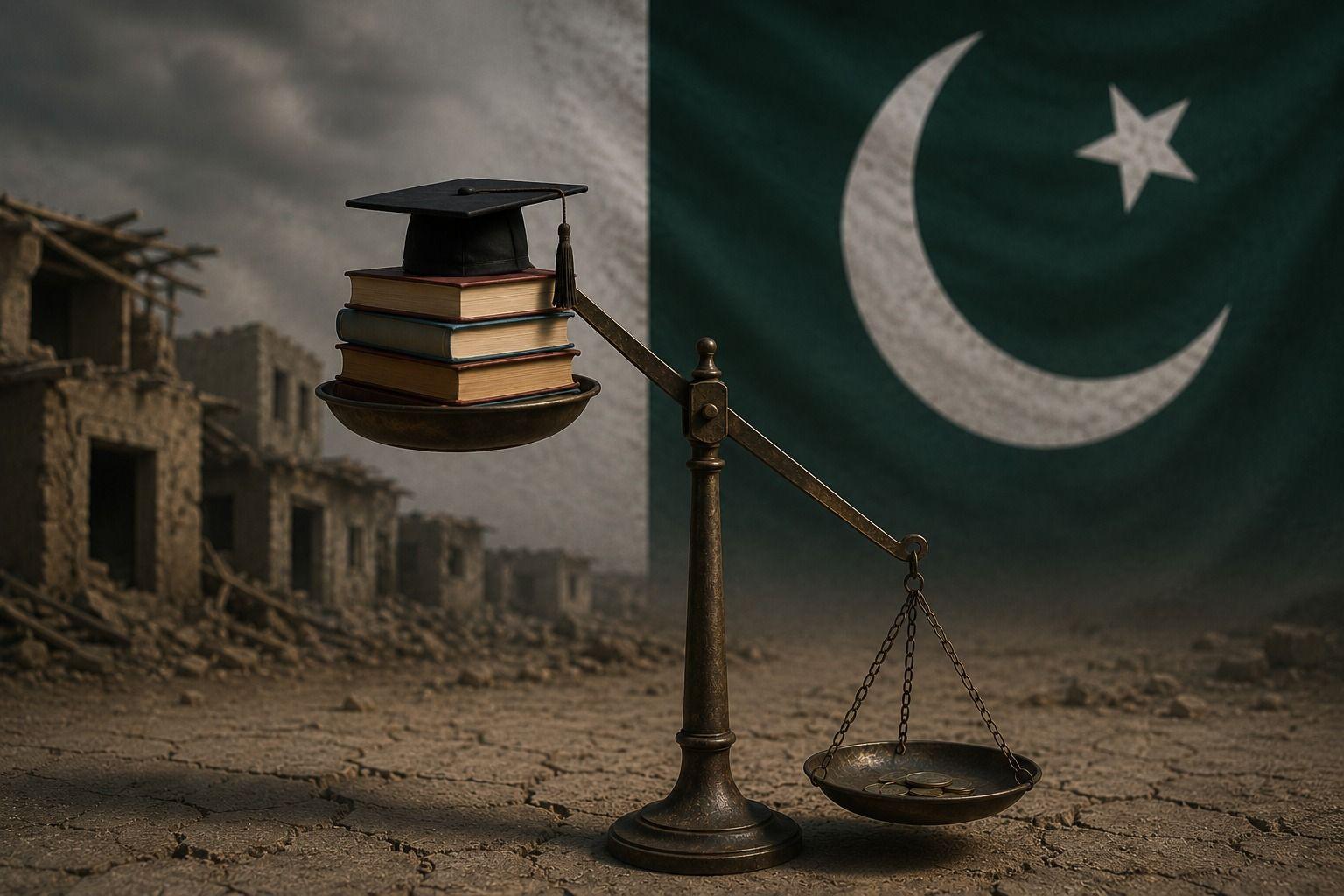
Pakistan Allocates Less Than 1% of GDP to Education, Raising Concerns Over Future Growth




Islamabad: Pakistan allocated only 0.8% of its Gross Domestic Product (GDP) to education during FY2025-26, according to the latest Economic Survey.
The figure has raised concerns among education experts, who believe that low investment in the sector could affect the country's future economic and social progress.
Education Spending Remains Below Global Standards
The latest data shows that Pakistan's education expenditure remains significantly below international recommendations. Global organizations generally suggest that countries should spend at least 4% of GDP on education to ensure quality learning, improved literacy rates, and better educational outcomes.
The low allocation highlights the gap between Pakistan's current education spending and global benchmarks, despite the country's growing population and increasing demand for quality education.
Read more
Punjab Extends Class 9 Registration Deadline for 2026-28 Academic Session
Millions of Children Still Out of School
Pakistan continues to face serious challenges in its education sector. Millions of school-age children remain out of classrooms, while many public schools struggle with inadequate infrastructure, teacher shortages, and limited learning resources.
Experts say that without increased funding, it will be difficult to improve enrollment rates, reduce dropout numbers, and provide quality education across the country.
Financial Pressures Affect Education Funding
Analysts believe that economic challenges and fiscal constraints have contributed to the low allocation for education. The government is currently balancing multiple priorities, including debt repayments, development projects, and economic reforms.
As a result, education spending has remained lower than what many experts consider necessary for sustainable growth.
Experts Urge Greater Investment in Education
Education specialists argue that investing in schools and universities is essential for building a skilled workforce. They warn that continued underfunding could limit opportunities for millions of young Pakistanis and weaken the country's competitiveness in the global economy.
According to experts, increased investment in education can help boost productivity, encourage innovation, and create better employment opportunities.
Education Seen as Key to Long-Term Growth
With one of the world's largest youth populations, Pakistan's future economic success is closely linked to the development of its human capital.
Economists emphasise that stronger education systems can contribute to long-term growth by improving workforce skills and supporting technological advancement.
Many stakeholders are now calling on policymakers to prioritise education in future budgets and introduce reforms aimed at improving access and quality.
Key Points
- Pakistan spent only 0.8% of GDP on education in FY2025-26.
- The figure remains far below international recommendations.
- Millions of children still lack access to quality education.
- Experts say higher investment is crucial for economic growth.
- Stakeholders are urging the government to increase education funding in future budgets.
About Author


Let us help you yield your true academic potential for foreign education. To configure and discover an apt international enrolment strategy, get in touch!


- +923041111444
- info@edify.pk
- Edify Building, 3rd Floor, Madina Town Faisalabad
© 2026 Edify Group of Companies. All Rights Reserved.