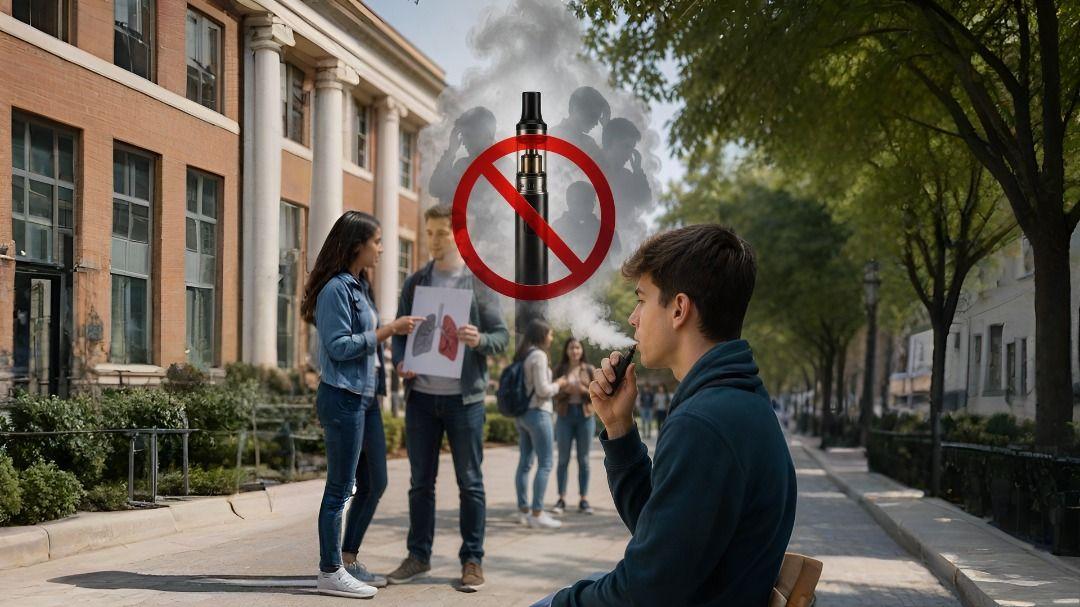
Vaping Isn’t a Vibe: Campuses Launch Anti-Vaping Campaign for Students




Vaping may look harmless, trendy or easier to hide than smoking, but educational institutions are now warning students not to underestimate its risks.
An anti-vaping awareness campaign for students has been launched across educational institutions to help young people understand the potential health effects of vapes, cigarettes, nicotine pouches and other nicotine-based products.
The message for students is direct: what begins as a casual experiment or a way to deal with stress can gradually turn into nicotine dependence.
University Students Attend Anti-Vaping Awareness Session
As part of the campaign, the Drug Advisory Training Hub arranged a one-day awareness session involving students from different universities.
The session discussed the risks associated with several nicotine products, including:
- Electronic cigarettes and disposable vapes
- Nicotine pouches
- Traditional cigarettes
- Other nicotine-based products
Students were also guided on how to avoid nicotine use and why maintaining a healthier lifestyle matters. Youth Vaping Demand Reportedly Rises by 20%
Speaking during the session, anti-drug campaign consultant Syed Zulfiqar Hussain said demand for vaping among young people had increased by approximately 20%.
He also highlighted the rapid growth of the global market for vapes, cigarettes and nicotine pouches. According to Hussain, this expansion is leaving more young people vulnerable to nicotine addiction.
Students, this means nicotine is no longer limited to traditional cigarettes. It is now available through products that can appear modern, convenient and socially acceptable.
However, changing the packaging or delivery method does not remove the risk of developing dependence.
Academic Stress Can Turn Into an Unhealthy Habit
Exams, assignments, presentations and constant academic pressure can leave students feeling overwhelmed.
According to Hussain, some students begin using vaping or other nicotine products while trying to cope with study-related stress. Occasional use may then become a repeated habit and eventually lead to dependence. A temporary “stress break” can therefore create another problem instead of solving the original one.
Students experiencing academic pressure should consider healthier coping options, such as taking structured breaks, exercising, improving their sleep routine or discussing their concerns with a counsellor, teacher or trusted person.
Related Read
HEC Announces Fully Funded BS Scholarships in Pakistan for 2026
Universities Urged to Open Counseling Centers
The campaign did not focus only on telling students to stop vaping. It also addressed some of the reasons young people may turn to nicotine in the first place.
Hussain urged universities to establish dedicated student counselling centres offering mental health support and professional guidance.
Such facilities could help students handle academic stress, make informed decisions and avoid potentially addictive behaviour. This approach treats student well-being as an important part of vaping prevention.
Instead of relying only on warnings or disciplinary measures, institutions can provide students with practical support before unhealthy coping mechanisms become established habits.
What Students Should Take Away From the Campaign
The campaign’s main takeaway is not complicated: vaping should not be treated as a harmless trend.
Students should understand what they are consuming, recognise how stress may influence their decisions and seek support when they feel unable to cope.
Universities also have a role to play by providing accurate information, accessible counselling services and a campus environment that encourages healthier choices.
At the end of the awareness session, students received information about the harmful effects associated with vaping, ways to avoid nicotine products and the importance of adopting a healthy lifestyle.
Using a vape might take only a moment. Breaking a nicotine habit can be much harder. For students, staying informed and asking for support early may be the smarter move.
About Author


Let us help you yield your true academic potential for foreign education. To configure and discover an apt international enrolment strategy, get in touch!


- +923041111444
- info@edify.pk
- Edify Building, 3rd Floor, Madina Town Faisalabad
© 2026 Edify Group of Companies. All Rights Reserved.